 $7.99 FLAT RATE ON ALL OTHER ORDERS


How to Read a Dog Supplement Label Before You Buy
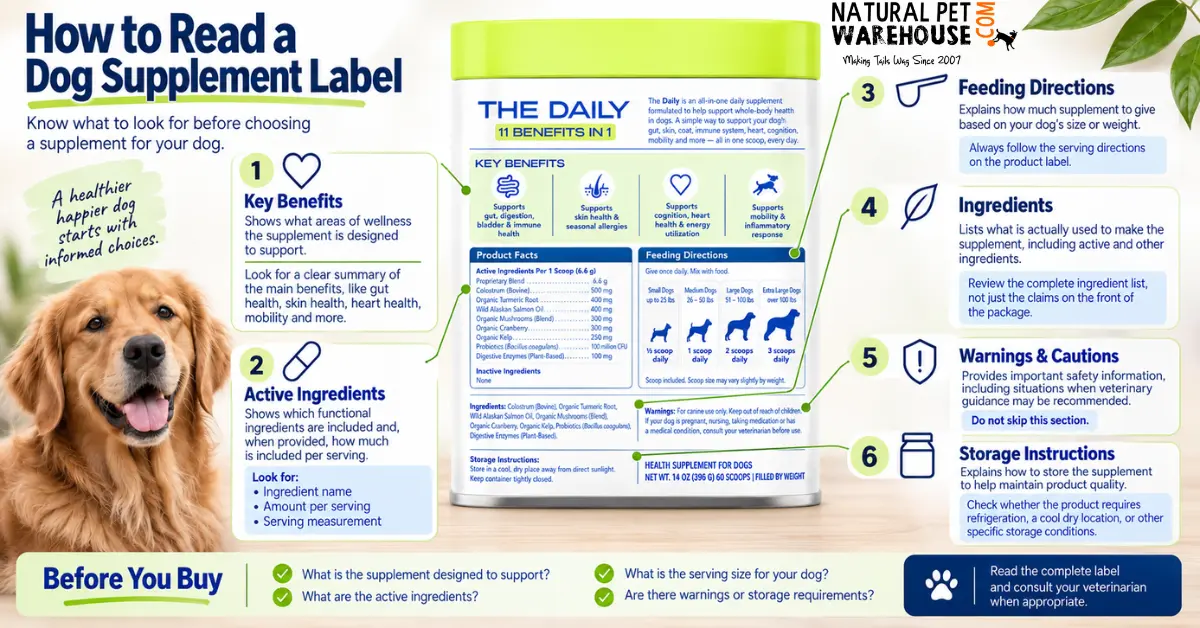

The front of a dog supplement may promise joint, digestive, skin, immune, or everyday wellness support, but the information that matters most is usually found on the label. Learning how to read a dog supplement label can help you compare products based on what's actually inside rather than relying solely on marketing claims.
Before adding any supplement to your dog's routine, take a few minutes to review its ingredients, active amounts, serving directions, quality information, and intended use.
Start With the Intended Use
First, determine what the supplement is actually designed to support.
Dog supplements can target areas such as:
- Joint and mobility support
- Digestion and gut health
- Skin and coat health
- Calming and relaxation
- Immune support
- Daily vitamins and minerals
- General wellness
A product with a long ingredient list isn't automatically better. Look for a formula that aligns with the specific nutritional support you're seeking.
Natural Pet Warehouse carries dog vitamins and supplements across these different wellness categories, allowing you to compare formulas based on your dog's needs.
Review the Active Ingredients
Next, look beyond ingredient names and determine which ingredients are responsible for the product's intended nutritional purpose.
Depending on the supplement, you might see ingredients such as:
- Probiotics and prebiotics
- Digestive enzymes
- Glucosamine and chondroitin
- Omega-3 fatty acids
- Vitamins and minerals
- Mushrooms
- Herbs and botanical extracts
Don't assume an ingredient is present in a meaningful amount simply because it's featured prominently on the front of the package.
Look at the Amounts Per Serving
Understanding how to read a dog supplement label also means looking at quantities.
Check whether the label tells you how much of an ingredient is provided per serving. Then determine what actually constitutes one serving for your dog.
For example, the listed amount might apply to one scoop or chew, while your dog's recommended daily serving could require more or less depending on body weight.
This makes the serving directions just as important as the ingredient panel.
Check the Recommended Serving Size
Dog supplement serving sizes often vary by weight.
A label may provide separate recommendations for:
- Small dogs
- Medium dogs
- Large dogs
- Giant breeds
Powders may use fractions of a scoop or teaspoon, while chewable supplements typically adjust the number of chews.
Follow the manufacturer's directions rather than assuming that giving more will provide better results.
Understand Probiotics and Enzyme Labels
Digestive supplements deserve additional attention because labels may include information such as probiotic species, colony-forming units (CFUs), prebiotics, and digestive enzymes.
For example, Nature's Farmacy Dogzymes offers several formulas containing probiotics, prebiotics, and digestive enzymes. Comparing the individual product labels can help you understand how formulas such as Daily Balance and Probiotic Max differ.
Rather than simply looking for the word "probiotic," review the complete formulation.
Look for Quality Testing and Certifications
Some manufacturers provide additional information about how their supplements are produced or tested.
Depending on the product, look for information about:
- Third-party testing
- Ingredient sourcing
- Organic certification
- Manufacturing location
- Batch testing
- Measured potency
Certifications and testing information should be specific. Avoid assuming broad phrases such as "premium" or "natural" represent a particular certification unless the label explains what they mean.
Be Careful With Product Claims
Supplements are intended to provide nutritional support, not replace veterinary diagnosis or treatment.
There's an important difference between a product that says it supports normal joint function and one that claims to cure a medical condition.
Be cautious of products promising dramatic or guaranteed results. Persistent symptoms such as digestive problems, severe itching, mobility changes, or unexplained changes in behavior should be discussed with your veterinarian.
Check Warnings and Storage Instructions
Don't overlook the fine print.
Some supplements need refrigeration after opening, while others should be kept in a cool, dry location. Labels may also include cautions for pregnant animals, dogs taking medications, or pets with existing health conditions.
Following these instructions can be important for both product quality and appropriate use.
Frequently Asked Questions
What should I look for on a dog supplement label?
Look for the intended use, ingredients, active amounts when provided, recommended serving size, feeding directions, warnings, storage requirements, and any specific quality-testing or certification information.
Does more active ingredient mean a better supplement?
Not necessarily. Ingredient quality, formulation, serving size, intended use, and your dog's individual needs all matter.
What does third-party tested mean on a dog supplement?
Third-party testing generally means an independent organization or laboratory has evaluated some aspect of the product. Check the manufacturer's information to determine exactly what was tested.
Can I give my dog multiple supplements?
Potentially, but check for overlapping ingredients first. Combining products can unintentionally increase the total amount of certain nutrients. Ask your veterinarian if you're unsure.
Compare Dog Supplements Before You Buy
Knowing how to read a dog supplement label makes it easier to move beyond marketing language and compare products based on ingredients, serving amounts, intended use, and quality information.
Before purchasing, consider your dog's diet, age, current supplements, medications, and specific wellness needs. Then compare labels to find a product that fits those requirements.
Browse dog vitamins and supplements at Natural Pet Warehouse, or explore Nature's Farmacy Dogzymes to compare probiotics, digestive enzymes, vitamins, minerals, and other nutritional formulas.
